Why name-your-perpetrator sites go viral…then end badly

Name-and-shame public perpetrator lists, apps, and websites are not new.
Yet, they seem to be…each time a new one emerges.
Maybe you’re old enough to remember the ‘Shitty Media Men’ list that was created shortly after #MeToo went viral in 2017. It was an anonymous, crowdsourced spreadsheet, where women could enter allegations about men in the media industry.
It was up for just 12 hours before going viral and being taken down. But, in 2018, one of the men on the list filed a lawsuit against the creator, Moira Donegan, which lasted for several years and ended with a 6-figure settlement.
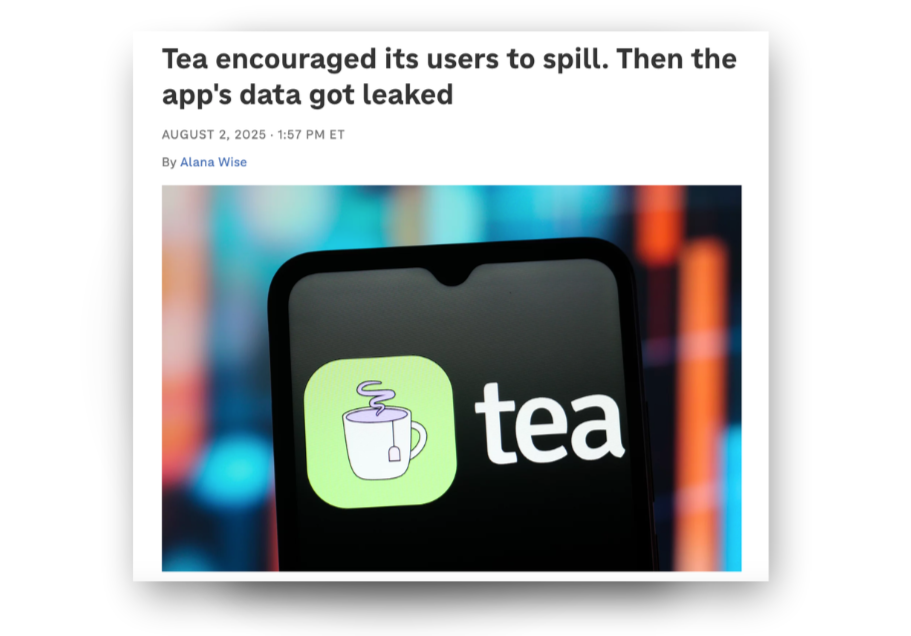
Or perhaps you recall the Tea app, a safety app for women created by a man named Sean Cook. Because the app failed to properly encrypt data, there was a massive breach in July 2025. Men online leaked the data, then doxed and harassed women who used the app.
And just this month (April 2026) following a CNN investigative story about a global ‘rape academy,’ several new sites and apps began popping up. Like those before them, they were designed to give women an anonymous way to name and ‘out’ predators.
One site was launched by a creator who went by ‘thebeardedleftist.’ The site NameHim.io was launched in a day, immediately went viral…and was then removed 3 days later, when bad actors added him, his wife, and his children to the public perpetrator list.
Why do these (well-intentioned) lists and sites end so badly?
First of all, it’s important to acknowledge that these sites are typically created with the best intentions. People have become increasingly aware (particularly recently with the Epstein files) that our systems far too often protect perpetrators and fail survivors…miserably.
And every time there is a story about pervasive, unchecked exploitation and violence, it triggers an overwhelming (and completely understandable) surge of outrage.
But, unfortunately, there is often a tendency to jump to creating solutions, without fully considering potential risks, evaluating why previous attempts have failed, or researching whether safer technology already exists. (Spoiler: It does!)
Creating an anonymous and searchable list of perpetrators is full of risks.
It exposes the creator and those who submit names to defamation lawsuits
These sites are rarely as secure as they need to be, which can lead to data leaks, doxing, harassment, threats, and more.
If anyone can enter any name, that means perpetrators and bad actors can, as well. This enables them to easily weaponize these sites to perpetrate more harm, or simply dilute their effectiveness.
Names are not unique enough. (Just think of how many John Smiths or Mike Johnsons you may know.) These lists can risk harming innocent people, who are only guilty of having the same name as someone else.
And, while false allegations are exceedingly rare, they do happen. And these sites not only allow for them, but they give those eager to shout “What about false allegations?!” something to shout about.
What if there was a safer solution?
Glad you asked. There is!

Callisto is a national tech-for-good nonprofit that was founded in 2011 by a survivor, Jess Ladd, to address serial sexual assault on college campuses. Our encrypted system was built and improved over time by a woman-led team of trauma experts, lawyers, engineers, advocates, and survivors, who not only understand the importance of survivor safety, but also the many ways bad actors try to weaponize and abuse these systems.
And our tech is designed to protect against that.
How is Callisto different?
Our encrypted Matching System is a revolutionary (and secure) way for those who have experienced sexual harm to find out if their perpetrator has harmed others.
Callisto is working toward the same goal as these perpetrator-naming sites: helping sexual assault survivors feel empowered, regain control, and increase the likelihood their perpetrator will face accountability.
But we do so in a way that is far safer for survivors, can help facilitate meaningful collective action, and minimizes opportunities for those looking to do more harm.
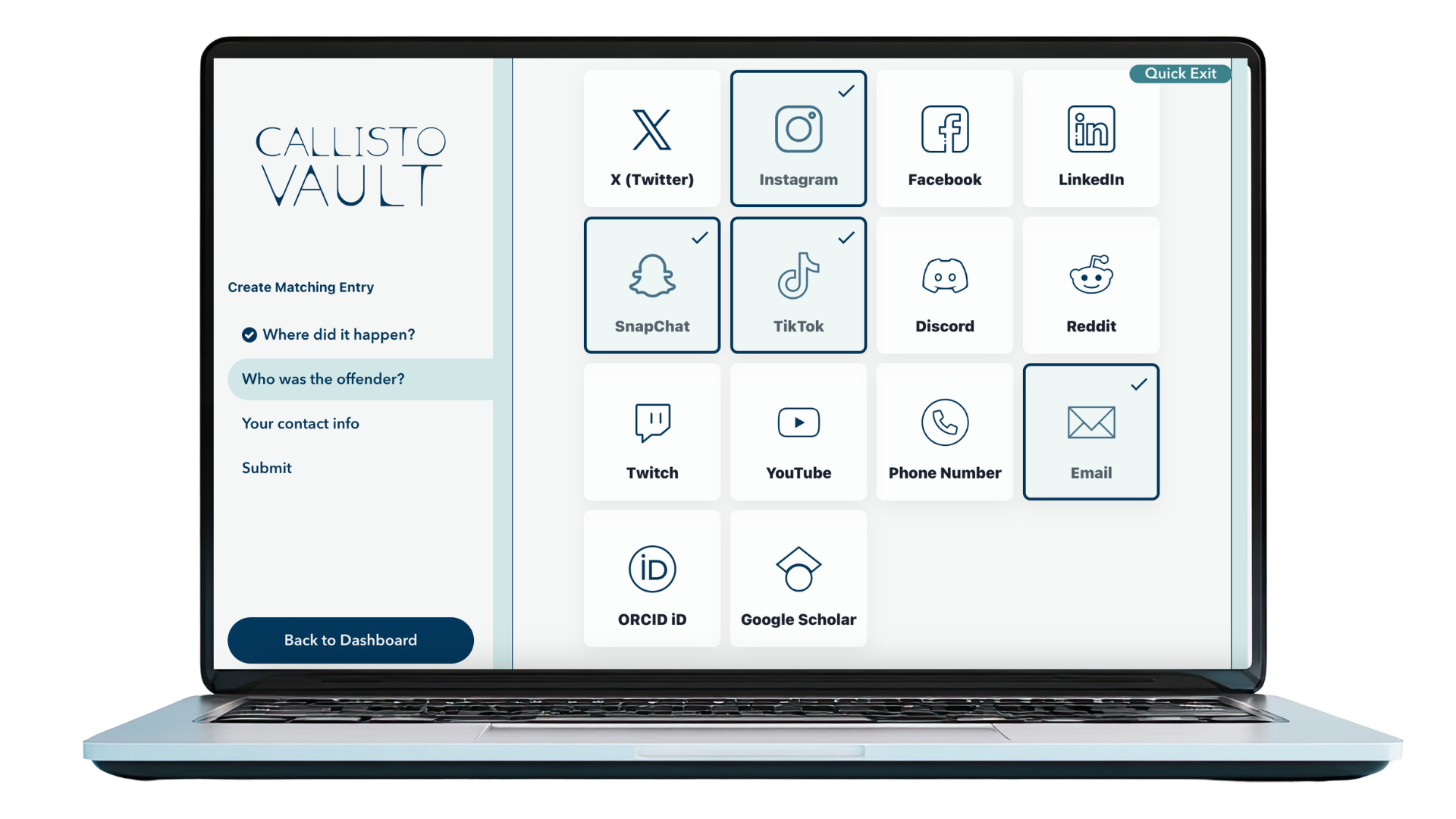
We do not match using perpetrators’ names. Instead, survivors enter unique identifiers of their perpetrator (i.e. phone, email, and social handles), which can only belong to one person.
Matching entries are not public or searchable and do not include any details of the incident, minimizing the risk of defamation lawsuits.
Data entered into our Matching System is encrypted before it hits our servers. That means the only person who can decrypt and see any information is the confidential advocate when/if there is a match.
While our system is private, confidential, and secure, it is not anonymous. This protects against bad actors, who cannot anonymously enter others with the sole purpose of causing harm.
After 2 or more survivors enter the same perpetrator and match in our system, they are then given the option to meet individually with a confidential advocate to share their experience and explore their options. Matched survivors can only be connected with one another if they verify their identity and all survivors agree to be connected, after discussing potential risks. This maintains survivor agency, while also reducing opportunities for those attempting to misuse the system and identify or harass those who enter.
Why isn’t Callisto available to everyone?!
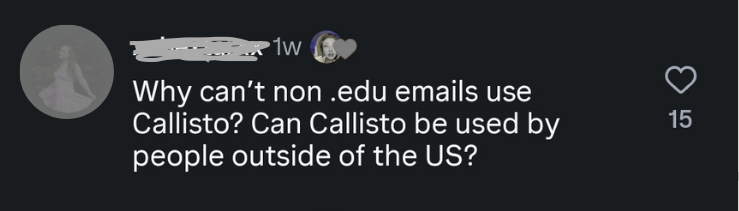
It is true that, as of April 2026, access is limited to survivors with a .edu from a U.S. college, including students, staff, faculty, and some alumni, which includes more than 21 million people!
But, our plan IS to expand!
Callisto was created to address campus sexual assault and the most updated version of our tech (Callisto Vault) was initially made available to survivors on 14 campuses in 2021. We were able to gradually increase access to 40 campuses and then ALL campuses in the fall of 2023.
While we are determined and working tirelessly to expand access to survivors beyond college campuses, the primary barrier is funding.

Nonprofits supporting survivors have had a particularly difficult last few years.
And Callisto is no exception.
To expand access, we would need additional funding to: maintain and strengthen the security of our tech, increase safety protocols to prevent harm by bad actors (many of whom have the means and would love Callisto not to exist), expand our team’s capacity, and ensure the organization’s growth is safe and sustainable.
What can YOU do?
There has never been a greater need for resources that protect survivors and fuel accountability than there is right now. And, while it can be tempting to rally behind the newest version of an anonymous perpetrator list that promises a quick launch and broad access, we encourage you consider (and share) the very real risks.
Because empowerment without safety is not a solution.
As Sexual Assault Awareness Month comes to a close, we also encourage you to learn more about the organizations that have been leaders in this fight for years, like Callisto, and consider supporting our work.
And if you think more people should know that safer solutions like Callisto DO exist – AND need support – please SHARE this blog. Because it just might reach a survivor who is feeling alone and like what happened was their fault. Or it could reach someone with the financial means to help accelerate our plans to expand…so more survivors will have the protection, support, and options they deserve.
Thank you so much to everyone who has donated, created a fundraising campaign, engages on social media, and passionately spreads the word about Callisto and our work! We see and appreciate you. Your support not only helps fund our mission, but it inspires us to continue to SHOW survivors that they are not alone and to give them back the control that was taken from them.
If you’d like to keep up with our work (and expansion plans) make sure to subscribe to our newsletter below!