
Callisto Is Gone. Cornell Shows What That Cost Us.

by Brian Byrd
Somewhere in an encrypted database, there are entries that will never be matched.
Each one represents a person, most often a college student, who did something extraordinarily difficult. They sat down, often alone, often in the days or weeks after the worst thing that had ever happened to them, and they wrote down what happened. They named the person who did it. And then they made a bet on the future: that someday, someone else harmed by the same person would do the same thing, and the system would quietly connect them, and neither would be alone anymore.
With the dissolution of Callisto, that bet is off. The organization built and maintained the only national platform of its kind: encrypted technology allowing survivors of sexual assault to document what happened and discover, safely and on their own terms, whether the same person had harmed someone else. Now it is closing its doors for good. As a former board chair of Callisto, I want to be honest about what this loss means, because I think the temptation will be to let it pass quietly. And quiet is precisely the condition that Callisto existed to break.
The world Callisto leaves behind
If you want to understand the stakes, look at the news out of Ithaca this month. A former Cornell student has filed a civil lawsuit alleging that seven members of the Chi Phi fraternity drugged and sexually assaulted her at the chapter house in October 2024. According to her complaint, two members pressured her to take what they said was ketamine while she was intoxicated; one then posted a message to a fraternity group chat, and other men came to the room and assaulted her over several hours. These are allegations in a pending lawsuit, not findings of guilt, and the accused deserve their day in court. But follow what happened next, because it is the part no one disputes in its outline.
She reported to campus police roughly three weeks after the alleged assault: three weeks she spent, like most survivors, carrying it alone. The Tompkins County district attorney concluded there was insufficient evidence to bring criminal charges. Cornell investigated under its own policies and barred the chapter from campus; her lawyer says two of the accused were expelled while others received lesser sanctions, reportedly including, in some cases, written essays. Now, two years on, she is seeking in civil court what neither the criminal system nor the university delivered.
Whatever a jury ultimately concludes, the architecture of this story is numbingly familiar: a survivor deciding alone, in silence, whether coming forward is worth it; a delay that prosecutors later treat as an evidentiary problem; institutional processes that unfold in private and end in sanctions no one would mistake for accountability. This is the architecture Callisto was engineered to change. Its vault gave survivors a way to create a timestamped, encrypted record in the immediate aftermath: precisely the contemporaneous documentation whose absence gets held against them when they report weeks later. And its matching system could reveal whether any named assailant had harmed someone before, transforming an isolated word-against-word account into a pattern that institutions find much harder to wave away. The Ithaca case is the world without Callisto. The dissolution guarantees that world continues.
What survivors actually lose
Start with the numbers, because they explain everything about why Callisto existed. By the most-cited research in the field, NINETY PERCENT of campus sexual assaults are committed by repeat offenders: perpetrators who assault an average of six times before they are ever stopped, if they are stopped at all. Meanwhile, fewer than one in ten survivors ever reports. These two facts are not independent. They feed each other. Survivors don't report because they fear it will come down to their word against their assailant's, because the process is retraumatizing, and because the odds of any consequence are vanishingly small. And because survivors report in isolation, serial perpetrators remain invisible: each incident treated as a one-off, each survivor left to believe she is the only one.
Callisto's insight was that this isolation is a solvable problem. Its matching system used cryptographic escrow, technology sophisticated enough to draw the attention of privacy researchers worldwide, to let a survivor enter a perpetrator's identity into a sealed vault. Nothing happened unless another survivor named the same person. Only then were both survivors connected to a free, confidential Legal Options Counselor who could walk them through their choices. No one was outed. No one was forced to report. The survivor kept control at every step.
It worked. Survivors who used Callisto were six times more likely to report their assault. Fifteen percent of users matched with another survivor of the same assailant: fifteen percent who learned, definitively, that it wasn't just them.
That is what disappears now. Not just a website or an app, but a standing possibility. A survivor who entered a name in 2023 was holding open a door that might not swing for five years, or ten. Matches surface on their own timeline; the entry waits. Dissolution slams that door on every person who is still waiting. There is no other national platform that replicates what Callisto did. When it goes dark, the capability simply ceases to exist in the world.
What it says about accountability
Here is the uncomfortable part. Callisto did not fail because the problem went away. Campus sexual assault rates have not meaningfully declined. Serial perpetration remains the dominant pattern. The organization failed because, as a society, we were unwilling to pay for the infrastructure of accountability, even when that infrastructure was cheap, proven, and elegant.
Consider what we do fund. We fund crisis hotlines and emergency services, as we should. We fund awareness campaigns, purple ribbons, training modules that students click through in fifteen minutes during orientation. What we systematically decline to fund is anything that makes accountability more likely: anything that shifts the actual odds that a person who assaults six people faces a consequence before the sixth.
Callisto's fundraising struggles were chronic and revealing, and I say this as someone who has spent more than twenty-five years inside institutional philanthropy. The organization nearly closed in 2024, announcing its shutdown before an outpouring of attention and emergency support bought it more time. But a rescue is not a business model, and the reprieve only postponed a reckoning the sector never intended to have. The underlying dynamics never changed: gender-based violence receives a historically tiny share of philanthropic dollars, a sliver of a sliver, despite affecting an estimated one in four women during their college years. Corporate funders, whatever their public commitments, grew skittish about attaching their names to the words "sexual assault," a phrase apparently too controversial for the same brands that sponsor awareness months. And Callisto itself occupied philanthropy's least fundable territory: too technical for direct-service funders, too service-oriented for tech funders, too focused on response for prevention portfolios, too preventive for legal-aid dollars. It was infrastructure. And philanthropy has never known how to fund plumbing.
But the category problem is the polite explanation, and funders deserve a less polite one. Foundations admired Callisto for a decade. Program officers took the meetings, praised the cryptography, cited the outcome data. And then they funded something safer. Because here is what Callisto actually asked of a funder: not compassion for survivors, which costs nothing, but a bet on consequences for perpetrators, which costs something real. Accountability infrastructure implicates the institutions that sit adjacent to every major endowment and every corporate giving program: universities, fraternities, employers, the criminal legal system. It names a category of person, the repeat perpetrator, whom our institutions have every incentive to treat as a statistical abstraction rather than a knowable individual. Funding a hotline says we care about victims. Funding Callisto said we intend for assailants to be found.
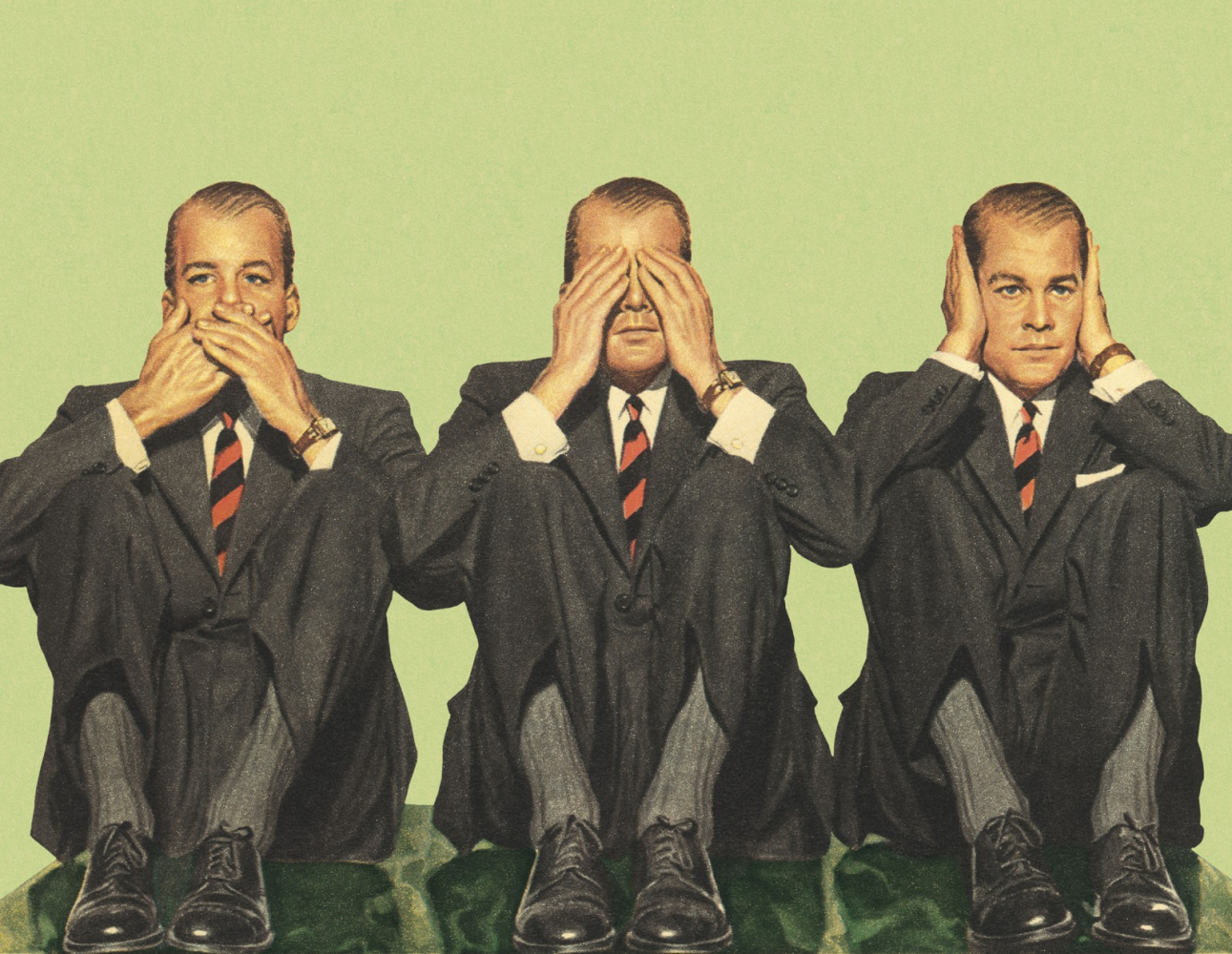
We fund what we are willing to look at. As a culture we have made our peace with an arrangement in which survivors are supported, gently, after the fact: counseled, believed in the abstract, invited to heal. The machinery that would impose costs on the people who harmed them remains unbuilt. Look at Cornell: a district attorney who declined to charge without, by his own account, reading the survivor's interview transcript; a university adjudication whose sanctions allegedly included essay assignments; a grand jury convened only after she sued, at her own expense, two years later. At Loyola University Chicago, ten women allege the school suppressed reports for a decade, knew of serial predators on campus, and told one of them that police charges would be hard to come by because it was "only sexual assault." At Northwestern, a former lacrosse player alleges the university admitted a baseball recruit after reading six emails warning of his history of sexual abuse; when she reported that he had raped her, he stayed on the roster. The survivor pays the lawyer so that someone, finally, will look. Multiply that by every campus in the country. The accountability gap persists not because it is unsolvable but because solving it is nobody's line item. When we let the only tool that made serial perpetrators visible die of malnutrition, we are stating what we are prepared to tolerate. Impunity is not an accident of our systems. It is a choice, renewed annually, in budget decisions.
The message survivors will hear
I worry most about what this closure communicates to survivors themselves. Every survivor who used Callisto performed an act of faith: faith that documentation mattered, that institutions could be trusted with the most painful facts of their lives, that coming forward, even quietly, even conditionally, was worth the risk. The organization honored that faith scrupulously; its encryption was so rigorous that even Callisto could not read the entries.
But the dissolution sends a different message, one survivors have heard before: your safety is a discretionary expense. The tools built for you will exist as long as they are fashionable to fund, and no longer. When the hashtags fade, so does the infrastructure.
We should refuse to let that be the last word.
The responsible wind-down of Callisto's encrypted data must be handled with the same care the organization brought to everything else, and the field should treat it as sacred work. The cryptographic model Callisto pioneered should be documented, preserved, and studied, because someone will need to build this again; the problem guarantees it. And funders who spent years admiring Callisto without writing checks should sit with the fact that the cost of keeping it alive was, by philanthropic standards, a rounding error. Philanthropy could still step up, but the funding would have to be substantial, enough for Callisto not just to survive but to become resilient.
In Greek mythology, Callisto survived an assault by Zeus only to be punished for it: transformed, silenced, erased. The organization that took her name spent more than a decade refusing that ending for others, insisting that survivors be seen and connected rather than isolated and disbelieved. Its dissolution returns us to the older story: the one now playing out in a federal courthouse filing from Ithaca, and in thousands of dorm rooms where survivors are deciding, alone, whether anyone will believe them. The question for everyone who watched Callisto die is whether we are comfortable with that.